Wednesday, April 24, 2013

Best Kept Wheeling Secret in CA - Located in Greater S.F. Bay Area!


Owners of 4x4 SUVs and trucks who live in the Greater S.F. Bay Area don’t have to drive 3-4 hours anymore to test out their off-road skills or the trail capability of their vehicle.   Located near Tracy, the Carnegie State Vehicular Recreation Area (SVRA) now offers a 4x4 driving course that is filled with diverse challenges for all types of 4x4s.


Carnegie SVRA has long offered world-class off-road motorcycle and ATV riding opportunities and is very popular with thousands of park fans who live in the area.  However, there was no 4x4 opportunity for full-sized rigs. That situation was remedied when the SVRA recently created a small 4x4 driving area complete with sand pits, hillclimbs, rock trails, and obstacle courses.


After paying a $5 dollar day-use fee, Quiet Warrior Racing had the chance to put its Montero through the paces.  Although QWR stayed away from the many “Rubicon-sized” obstacles, we did enjoy a good number of trail challenges ranging from the sand pit to the “Frame Twister.”


QWR believes that Carnegie should be commended to creating this 4x4 opportunity for the trail enthusiasts who live in the area.  It is a great place to teach off-road skills to a newcomer or test your driving acumen.   You can also find out if your rig is ready for hard-core wheeling on such famous routes as the Rubicon Trail or Dusy Ershim Trail.


There are several picnic tables under shade structures where you can enjoy watching your friends get their rigs stuck or otherwise test the limits of their vehicle. If you did not bring any food, you can always stop by Motomart – which is located in the park - to pick up some snacks.


QWR encourages all 4x4 enthusiasts who live in the Greater S.F. Bay Area to consider visiting the park to enjoy this special opportunity that may just be the best kept “wheeling secret” in California.
 
Link to Carnegie SVRA
 

# # #


Tuesday, April 23, 2013

2013 CA Helmet Law for SXS Operators


As owners of Recreational Off-Highway Vehicles (ROVs) get ready to hit many popular OHV riding areas in California, it is important to remember that helmets are required to be worn by the operators and passengers when traveling on public roads, trails, and areas designated for such use.
Effective January 1, 2013, the California Vehicle Code (CVC) Section 38601 requires all passengers and the operator to wear a safety helmet while operating an ROV which are also known as Side by Sides, Recreational Utility Vehicle, or Utility Terrain Vehicle.
 
CA OHV Division Info on Side x Side Helmet Law
 
Quiet Warrior Racing (QWR) believes it is important for ROV owners to share this information with other ROV operators particularly in rural areas where regulations passed in Sacramento don’t often get shared effectively with users not associated with clubs or organizations.


QWR wants to commend federal and state law enforcement personnel and resource protection officers for working hard to help educate ROV owners about this new regulation.  Signing and public outreach are important elements of effective law enforcement.  Those tools will most certainly play a critical role to inform the user community as this new safety regulation gets implemented on public lands in California.


Wednesday, April 10, 2013

Backcountry OHV/Adventure Safety - SPOT Location Service


QWR believes that rider safety is an important tenet of responsible OHV recreation.  Within the last week, two of my OHV/adventure friends were saved by their SPOT GPS Satellite Messenger while riding in rugged areas of the California Coastal Mountain Range and the Sierra Nevada.

The SPOT Messenger was added to the QWR chest protector about 6 years ago.  The unit has 3 functions which includes a HELP function that can alert your friends and family that you are in a non-life threatening situation but are in need of assistance (i.e. broke down vehicle, etc.)

The OK check-in function is great for when you are in the backcountry without cell service and you want to send a message (with your GPS coordinates) to family members that the ride is going great.  QWR uses that feature a lot as it reassures your loved ones that you are OK.

The SOS function is for when you are in a life threatening situation and you need emergency medical care STAT.  When that function is activated, it sends your GPS coordinates to a world-wide emergency response center that will contact the appropriate services.

For about $170 dollars/yr. you get the SPOT tracking device and the emergency medical services.   QWR believes this product is the best "safety" insurance that money can buy if you ride in the backcountry.   This unit is being used by many members of my riding network in both the private and public sector.  Having this product on your chest protector or backpack is a must addition to your adventure gear.
Link to SPOT Location Service
http://www.findmespot.com/en/

See you on the trail,

Don

Email: damador@quietwarriorraacing.com


Wednesday, March 27, 2013

OHMVRD to Relaunch State Motorized Trail System?

Segment of the 90s-era CA Backcountry Discovery Trail on Six Rivers NF
 
It is no coincidence the Statewide Motorized Trail System (SMTS) was on the agenda at the recent meeting of the Off-Highway Motor Vehicle Recreation Commission in Redding, California.  Commissioners were informed that a multi-year formal statewide state/federal planning effort is needed to codify and implement SMTS.
 
In 2009, the Off-Highway Motor Vehicle Recreation Division published its Strategic Plan.  The document outlined a well-crafted long-term vision for operation of the Division and management of OHV opportunities in California. It also stated (pages 33-34) the Division… "anticipates increased interest in the statewide long distance motorized trail system and a need for places to pursue various types of multi-day sport utility vehicle (SUV) touring opportunities." 


Link to OHMVRD 2009 Strategic Plan


The concept of a formal statewide system of motorized adventure routes was first noted in the California Recreational Trails Act of 1974.  Over the years, subsequent SMTS-related legislation was passed and on-the-ground planning efforts were undertaken by Division staff, federal partners, and other stakeholder groups.
 
Unfortunately in the late 1990s, work on the partially completed route network was halted when the state was challenged by legal action filed by opponents of the plan.  They stated that a full EIR/EIS must be completed to implement and sign the statewide trail system.
 
It has been a dream of many OHV enthusiasts to have a formal network of non-paved backcountry routes that connect many of California’s scenic areas.  It is encouraging to note that motorized adventurists may be one step closer to that reality. 
 
# # #


Monday, March 18, 2013

Wildfire Impacts on Trail Delineators and OHV Management

Mill Fire Destroyed Natural and Man-Made Trail Delineators
 
When catastrophic wildfires hit our national forests, it’s not just the wildlife and timber that are impacted.  Those fires often destroy many of the OHV management tools used to direct motorized recreationists to stay on designated roads and trails.
Trail delineators or barriers are commonly used to help encourage OHV users to stay on the trail and discourage cross-country travel where such use is prohibited.   When the 2012 Mill Fire burned over 80% of the designated trails at the Stonyford OHV Area on the Mendocino National Forest in Northern California, it destroyed thousands of man-made trail delineators and natural barriers such as manzanita, knobcone pine, and other forms of vegetation.
Forest Service and Volunteers Install New Trail Delineators on Mendocino NF
 
As part of a massive effort by the Forest Service, volunteers, and other partners to get the unit ready for public use by June 1, the agency and volunteer work crews are installing hundreds of new trail delineators along major transportation corridors and near campgrounds/staging areas that were impacted by the Mill Fire.
 
If you would like to help support these efforts please contact Don Amador at damador@quietwarriorracing.com or Paige Makowski at paigemakowshi@fs.fed.us
 

Wednesday, February 27, 2013

Water Quality Management Key to OHV Future

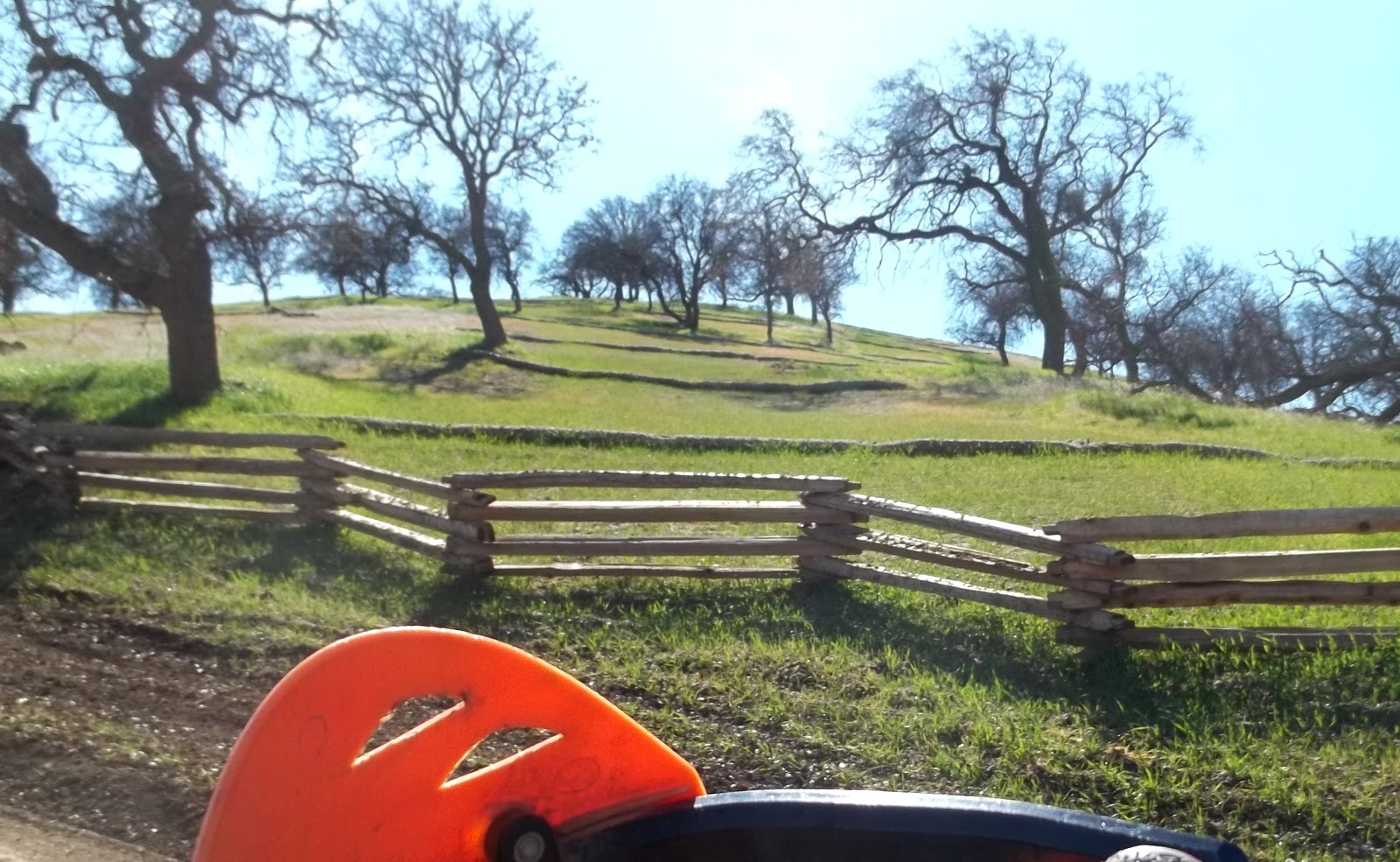
Hillside Stabilization at Carnegie SVRA
 
The future of OHV recreation depends on our collective ability to successfully address motorized recreation-related water quality issues on state and federal lands.  Recently, QWR had the opportunity to tour and document various water quality/soil erosion mitigation measures that have been implemented at Carnegie State Vehicular Recreation Area.  This unit is managed by the Off-Highway Motor Vehicle Recreation Division at California State Parks and is located near Tracy, California.
Designated Routes/Signs are Key Management Tools
 
Sometimes these management prescriptions designed to keep riding areas open for future generations are overlooked and/or under appreciated by the casual rider.  QWR believes it is important for riders to appreciate the tremendous amount of work performed by land managers and volunteers to help ensure that OHV recreational opportunities remain viable on public lands.
 
Trail Delineators, Contour Trails, and Hillside Stabilization are all Water Quality Tools
 
Next time you go riding, keep your eyes on the lookout for the multitude of management tools (e.g. signs, catch basins, contour trails, hillside stabilization measures, etc.) that help keep our trails open.  Feel free when you get home to send the appropriate land manager and/or club that has been working on those projects a thank you.  They will appreciate it.
# # #
Comments welcome - send to: damador@quietwarriorracing.com


Tuesday, February 19, 2013

New Smokey Bear Ad and OHV Spark Arresters

QWR Sound Check Station at Chappie-Shasta OHV Area
 
As you know, QWR promotes the use of sound compliant exhaust with a functioning spark arrester when riding an OHV on designated roads, trails, and areas on public lands.  Recently, the Ad Council started its new Smokey Bear campaign in time to remind various publics about how they can help prevent wildfires.
Smokey Bear Campaign
QWR also wants to commend the campaign for its positive message when it comes to the use of OHVs on public lands.  Several years ago, the Smokey Bear program had a less-than-positive message about the legal use of OHVs on federal lands. 
In addition, the Forest Service updated their Spark Arrestor Guide last year with a lot of good information including a detailed list of all OHV-related approved spark arrestors.
 
Spark Arrester Guide – OHV Vol. 3
 
 
According to the guide, Forest Service Standard 5100-1c requires that each arrester shall be permanently marked with the model number and the manufacturer’s name or trademark. The model number must match exactly. The identification must be stamped in the metal body or on an attached metal plate.
 
Many states have spark arrester laws.  For those if you in CA, you can find that law below:
 
QWR looks forward to seeing many of you out on the trail this year.  Let’s all work to help ensure that OHV recreationists are using sound compliant spark arrestor exhaust systems to help reduce the threat of wildfires on public lands.