Thursday, March 24, 2016

Trail Ethos for E-Bike Community


QWR believes that all outdoor recreational activities should have a responsible land-use ethic.

Land managers today face a growing number of new trail-related technologies.   QWR believes many of these new vehicle types are encouraging the public to get off the couch and hit trail… which is a very positive development.


However, with new vehicle types comes the responsibility of that sport to adopt and embrace a sound trail ethic that imparts respect for the land and other user groups.

Over the last several years at various recreation events, QWR has visited with local, state, and federal recreation officials about the explosive growth of E-bikes on both motorized and non-motorized trails.

According to Wikipedia, “An electric bicycle, also known as an e-bike or booster bike, is a bicycle with an integrated electric motor which can be used for propulsion…  E-bikes use rechargeable batteries and the lighter varieties can travel up to 25 to 32 km/h (16 to 20 mph), depending on the laws of the country in which they are sold, while the more high-powered varieties can often do in excess of 45 km/h (28 mph).”


In numerous areas, the trail-use laws and regulations are unclear as they relate to E-bike cross-county travel or use on public land trail systems.   This is not the fault of the E-bike community or the agency.  Rather it is a sign that E-bike stakeholders should be proactive and work with trail managers to create a strong land-use ethic and regulatory platform that both protect the resource and the long-term viability of the sport.


QWR is encouraging the E-bike community to consider developing a common sense national trail ethos through the collaborative process with agency staff and other user groups.   This will be good for the sport and the land.

Comments and feedback are encouraged.


Wednesday, March 23, 2016

TRAIL NEWS UPDATE – FS National Trails Strategy


Don Amador on FS System Trail
Mendocino NF

QWR commends the Forest Service for its effort to develop a national trails strategy for sustainable motorized and non-motorized trails.

LINK TO FS NATIONAL TRAILS STRATEGY

According to the agency, for the past two years, the Forest Service has gathered the body of knowledge which now forms the core of the Trails Strategy discussion draft. Through engagement with employees at all levels of the agency, non-governmental organizations and partners, other trail management agencies, and the health care and private industry, we are striving to define and implement a strategic approach for closing the gap between where we are and where we want to be.

Trail Inventory
Six Rivers NF


QWR encourages trail professionals and advocates to download the discussion draft strategy.  QWR believes this is a very positive program and will provide important high-level guidance to line-officers and agency trail champions at the Regional Office, Forest, and District levels.

Rubicon Trail

This is a very exciting process and bodes well for the future of trail-based recreation on lands managed by the Forest Service.

# # # 

Sunday, March 20, 2016

OHV Recreation Key Partner in National Monument Dedication

Interior Secretary Sally Jewell on
4x4 Tour

Article by Don Amador
March 20, 2016
Word count: 529

Note to editor: Permission is hereby granted to reproduce this article

OHV Key Partner in National Monument Dedication

COWBOY CAMP, CA (March 19) - A popular BLM equestrian campground was the site for the official dedication ceremony for the Berryessa Snow Mountain National Monument.  Secretary of the Interior Sally Jewell was joined by Members of Congress, local elected officials, state dignitaries, Forest Service Chief Tom Tidwell, BLM National Director Neil Kornze, other FS/BLM officials, and diverse user groups including OHV recreationists.


Mendocino NF's Ann Carlson and BLM Ukiah Field Office's Rich Burns
Welcome Folks to Dedication

California Secretary of Natural Resources John Laird 

What made this event unique is that OHV recreation was featured as a key partner in development of the plan to bring additional resources to enhance both conservation efforts and existing/ future non-motorized and motorized recreational opportunities within the Monument boundary.  

Department of Interior Secretary Sally Jewell

Congressmen Mike Thompson and John Garamendi Hand Out
Certificates of Appreciation

All of the speakers noted that OHV recreation has been, and will continue to be, an important part of the recreation program in the Monument.

OHMVR Commission Chairman, Ted Cabral, Visits
with Jay Watson, Director of the Student Conservation Association

In addition to the official dedication ceremony, the event had two other official activities.  Those were a morning hike on non-motorized trails and an afternoon 4x4 tour of the BLM’s Walker Ridge where the agency is getting ready to start the route designation process.

Rigs Lined Up for Start of 4x4 OHV Tour

Secretary Sally Jewell, former CEO of REI, was very engaged with the 4x4 tour’s participants which included the Mendocino 4x4 Club, Matson Breakey/MetalCloak, CA OHV Program staff, BRC, Tuleyome, and FS/BLM officials.

Official 4x4 Tour Map

The group got to visit with Secretary Jewell on a broad range of subjects including the CA OHV program, trail volunteerism, partnerships, modern trail management prescriptions, potential new trail designations within the Monument, special recreation permit reform, and other OHV recreation topics.

Secretary Sally Jewell Talks with 4x4 Tour Group 

 A lot of credit for this collaborative effort goes to Tuleyome, the regional conservation group that has been working with OHV and other stakeholder groups for the past 6-7 years to help ensure a bright future for multiple-use recreation on lands managed by the Forest Service and BLM.


This part of California is host to numerous destination OHV areas including BLM’s Cow Mountain Recreation Area and the Knoxville OHV Area.  The Mendocino National Forest manages both the Upper Lake and Stonyford OHV Areas.  This area is also home to many OHV permitted events including enduros and dual sport/adventure rides.

OHMVRD Booth at Dedication


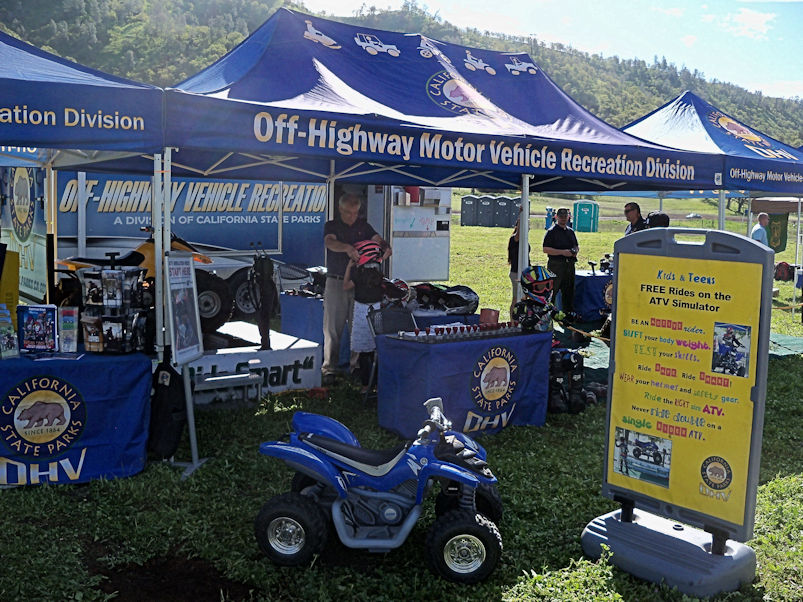
The California State Park Off-Highway Motor Vehicle Recreation Division (OHMVRD) was at this event to highlight the important long-term relationship between the FS/BLM and OHMVRD’s grant program that helps support trail maintenance, restoration projects, and law enforcement on the federal units.

Site of Monument Dedication

OHV recreation will continue to play an important role in helping shape its future by participating in development of the Monument Management Plan.  This will be a multi-year process where local input will be critical. 

California Conservation Corps is an Important Trail Partner

OHV clubs and individuals will also continue to be an important volunteer workforce to help maintain current and new trail opportunities. 

Mendocino NF Staff 

These types of bipartisan partnerships between OHV, land agencies, and conservation groups will continue to evolve as a key element to managed recreation in the 21st Century.

 # # # 

Don Amador is a contractor to the BlueRibbon Coalition and serves as their western representative.  Don is also president of Quiet Warrior Racing/Consulting.  He writes from his office in Oakley, CA.  Don may be reached by email at: damador@cwo.com


Monday, March 7, 2016

Be a Trail Champion - Start an E-Club

Agency Staff and Trail Volunteers 
Mendocino NF

As the Forest Service and BLM continue to improve their trail-based recreation programs throughout the country, it is important for agency officials and community leaders to appreciate the two key elements needed for long-term success.  Those critical tenets are substantive interaction/collaboration between an agency recreation lead/point-of-contact and a local club/organization.

Trail Volunteers Review Restoration Project with Agency Staff
Tahoe NF


Virtually any successful fed/state/local OHV recreation program has both an agency and local “champion.”  The agency lead meets with local recreation groups to discuss trail management issues.  They develop a robust volunteer program that engages trail enthusiasts in caring for the land by maintaining recreation facilities which include staging areas, campgrounds, and trail systems.

Trail Volunteers Help with Post-Fire Rehab
Mendocino NF


The community user group provides important feedback to the agency in regards to historic uses and cultural norms.  Local trail organizations can provide the labor pool to help the agency with volunteer work projects and fundraising.  Community groups can often help act as a bridge between the agency and local county/city government.

Trail Volunteers Work with Agency to Install Trail Delineators to Protect Resources
Mendocino NF


Line-officers have an important role to play in this equation since it is up to them to identify and appoint the appropriate agency staff lead that will be a “trail recreation champion.” In areas of the country where there is no organized trail group, a local user should “answer the call” to step forward and help organize a trail association.

Local Club Leaders Tour Route Project with FS District Ranger
Six Rivers NF


That new local group does not need to worry about incorporating at first.  An “E-Trail Group” comprised of an email network of interested riders and businesses can be a very effective organization that has standing with the agency and local government.

OHV Club Leaders Tour Trail System/Post Fire Rehab with FS Staff
Stanislaus NF


If you or your club has already “adopted” a local land agency, then good on you!  However, if your area does not have a club or network formed to assist the agency in helping care for the land, then consider starting an association.  The agency will appreciate it more than you know and it can lead to a successful relationship/partnership between the public and private sectors.

Wednesday, February 17, 2016

"Share the Road" is Sound Travel Ethic

"Share the Road" Sign
Shasta Trinity NF

As federal and county agencies designate more of their non-paved road networks for use by both street legal and non-street legal motorized vehicles, it becomes increasingly important for land managers and user groups to champion a strong “Share the Road” travel ethic.

Many new-to-the-sport OHVers may not be aware that most federal and county non-paved roads are open for two-way traffic.

Forest and BLM roads are not just used by traditional OHVs which include dirt-bikes, ATVs, SxSs, and jeep-type vehicles.  Rather, they are also used by hunters driving pickups, tourists driving for pleasure in SUVs, loggers and miners using heavy equipment, agency staff driving large fire trucks, property owners towing a horse trailer, and many other users and vehicle types.

QWR commends those clubs and government agencies that promote a Share the Road strategy that incorporates a substantive signing program and strong narrative on related websites and/or event flyers.  If you are an entity that does not articulate a Share the Road philosophy, consider establishing a related program.

When government agencies designate a road for mixed-use by various vehicle types, it is important that all stakeholders appreciate their respective role in helping spread the word to “Share the Road” with other users.

QWR believes that OHVers should use common sense when operating on public roads since you never know who or what is coming around the corner.   You should ride on the correct side of the road with the anticipation that a logging truck, another OHV, or fire engine IS coming around the bend and adjust your speed accordingly.

Common sense combined with a better understanding of who is using public roads is a good recipe for a safe experience for you, your family, and those you meet on the trail (or road in this case).

Monday, February 15, 2016

"Seat Time" Important Part of Trail Education

Region 5's Regional Forester, Randy Moore, (Far Right)
on Tour of Stonyford OHV Program

QWR believes that spending quality time out in the field and on the trail with local club representatives, agency staff, and OHV business leaders is a critical factor in land-use education efforts.

Attending meetings and hearings related to trail use are important and will remain so for decades to come.  In addition, OHV professionals and advocates should also include on-site field/trail reviews with local experts and key decision-makers as part of their advocacy/education program.

Eric Anderson,Vroom Network, Tours "Wash"
Designation  and Grouse Issues in Northern Nevada


Today, many public land agencies have embraced the collaborative process where key interest groups are invited to participate in ongoing meetings where unit management ideas are discussed.  Eventually, those concepts addressing forest health, impacts of intense wildfire, and OHV recreation might be used to help shape future agency planning efforts.

Forest Supervisor Tours OR Dunes With Users to Review
OHV Management Program


Staff turnover is not just affecting the Forest Service and BLM.  Clubs often select new presidents or task members with being their point-of-contact for trail issues.   On many units, agency leadership and recreation staff are rotating out at an alarming rate do to retirement, move-to-promote, or other factors.

Local Club Officials and Volunteers Engage with
FS Recreation Staff in Trail Monitoring


OHV industry representatives are also important to include in the trail education process since they often have both a professional and personal stake in sustainable motorized recreation.

OHV Representatives Tour Hull Creek OHV Program
with FS Recreation Staff Lead


Modern 21st Century trail management has many tenets that are best experienced out in the field.  Those prescriptions/concepts include trail signing, connectivity, erosion control structures, route armoring, public information programs, quality of the user experience, law enforcement, resource restoration efforts, potential trail projects, and safety programs.

FS Recreation Lead Tours Trail Program


There are also potential impacts from ongoing or future agency planning efforts that might impact the current OHV program.  Over the next 5-20 years, land managers will be making trail decisions based on everything from major landscape level plan revisions to OHV route and event restrictions driven by environmental regulations or court ordered mandates.

Riders and Agency Recreation Staff Tour/Discuss FS Restoration 
Grant Project

 QWR wants to encourage the OHV education community to continue efforts to spend some quality “seat time” out on the trail with our key partners.  There is no substitute for stopping on the tour and discussing just how a planning process or proposed regulation might impact OHV use.  That stop might also be the best time to see if a solution is possible.  

See you on the trail.


Sunday, January 31, 2016

Collaborative Effort Promotes Responsible OHV Recreation and Minimizes Resource Impacts

2011 Post Subpart B Trail Recon with FS
and Local OHV Club

QWR has long believed that partnerships and collaborative efforts are key elements in any 21st Century OHV recreation program.  In many rural areas where federal land-based timber or other resource industry activities have ceased to exist, recreation tourism can help bring economic benefit to the region.

A good example of where OHV tourism may fill that role is in Trinity County, California.  Several decades ago, this NW region of the Golden State had a robust timber economy.  However, due to growing environmental regulations and other factors, the federal timber program ground to a halt and so did the local economy.  The lumber mills were closed and people lost their jobs.

QWR is proud of the recent collaborative effort between The Watershed Center, the Shasta-Trinity National Forest, and the California State Park Off-Highway Motor Vehicle Recreation Division’s Grant Program to promote sustainable OHV recreation on public lands in Trinity County.

Remember to Share the Road
Shasta-Trinity NF


According to the Center, the Trinity OHV Project is part of an ongoing effort to promote OHV recreation in Trinity County while facilitating sustainable OHV trail use through community engagement, the promotion of legal riding, and long-term planning that minimizes the damage to the environment.


Historic FS Fire Camp Cabin
Shasta-Trinity NF


The Center also states, by providing user-friendly information that showcases legal routes and offers information about environmentally sensitive areas, we are working to serve the dual goals of minimizing environmental damage while promoting OHV recreation in Trinity County.

QWR credits the Shasta-Trinity National Forest of laying much of the groundwork for this effort by fulfilling its commitment to the OHV community to engage in post subpart B project-level trail/area planning.  About 5 years ago, the Forest hired an OHV program manager to review the agency’s OHV route network with a goal to enhance legal motorized recreational opportunities.

Plummer Peak LO
Shasta-Trinity NF


The Trinity OHV Project joins a growing list of high quality OHV-based recreation programs throughout the country that strive to bring economic benefits to the local economy while minimizing environmental impacts to the resource.

LINK TO THE TRINITY OHV PROJECT

# # #